The Doubles Toolkit: the Great Ball guide
The core competitive toolkit for Pokémon Champions doubles: Fake Out, Tailwind / Trick Room / Choice Scarf speed control, setup + debuff stat manipulation, Helping Hand, and focus-fire, with legal Reg M-B users and verified clips.
Last updated · evergreen, updated as the meta evolves
This is the meatiest guide in the ladder, because it covers the tools that separate "clicks the strongest move" from "plays doubles." Fake Out, speed control, setup and debuffs, Helping Hand, and focus-fire are the vocabulary of every competitive game. The Great Ball bot respects type matchups and plays loosely, which is enough that these tools start to pay off. Every example set below is drawn from the current Reg M-B meta.
Type & coverage mastery
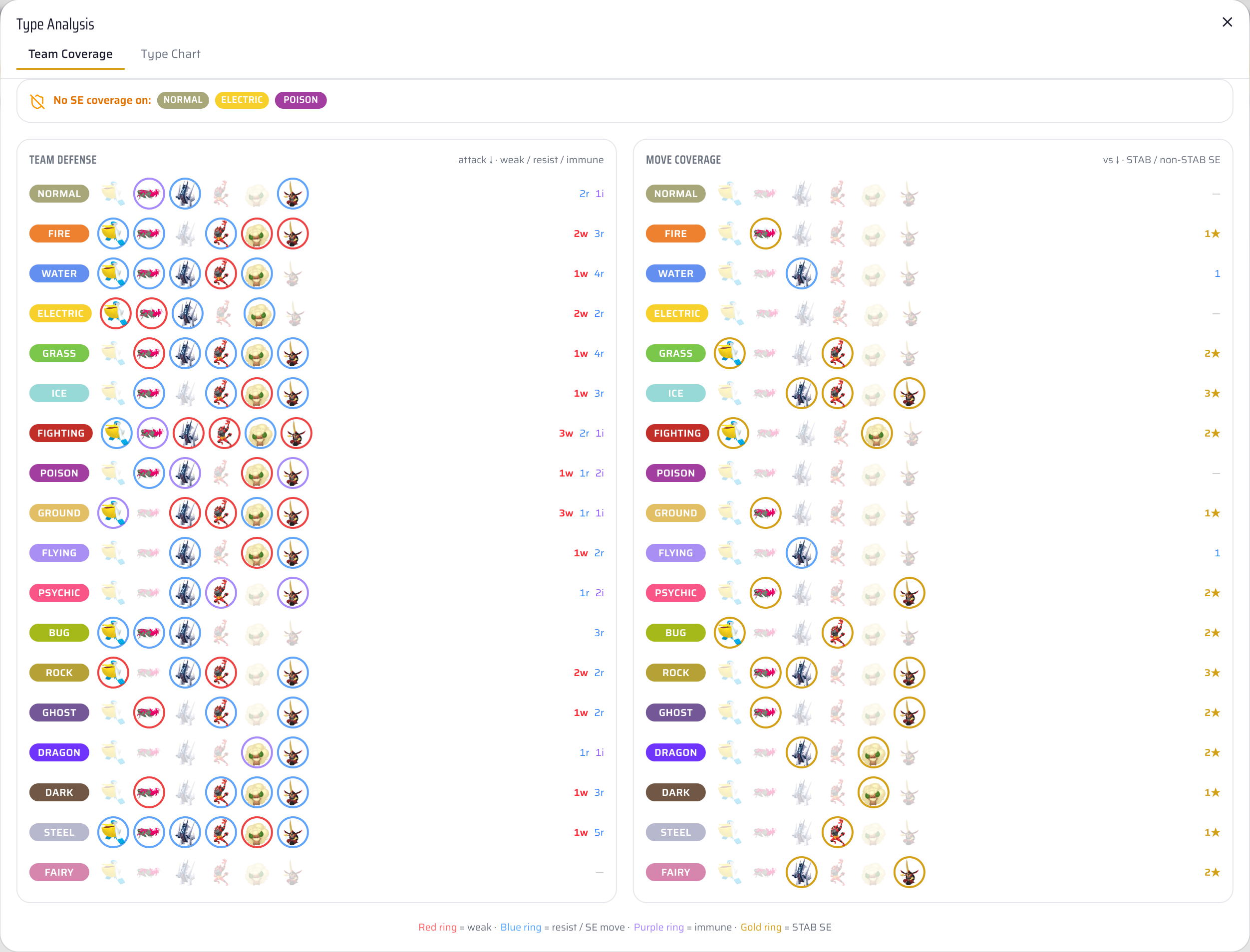
Before the tricks: your four attackers should, between them, hit the whole format for at least neutral damage. That’s coverage. A team that is walled by a common type has a hole a good opponent will exploit. Aim for two or three attacking types that cover each other’s resists (e.g. a Fairy + a Steel + a Ground rarely leave gaps). The other half of typing is defensive synergy: your Pokémon should cover *each other’s* weaknesses so no single attack threatens your whole side.
| Pairing | Covers because… | Legal M-B example |
|---|---|---|
| Fairy + Steel | Steel handles what resists Fairy (Fire, Poison, Steel via coverage) |  Sylveon Sylveon Kingambit Kingambit |
| Ground + Fire | Ground hits the Steels/Rocks that wall Fire |  Garchomp Garchomp Charizard-Mega-Y Charizard-Mega-Y |
| Water + Fighting | Fighting breaks the Grass/Water walls |  Basculegion Basculegion Sneasler Sneasler |
| Ghost + Dark | Almost nothing resists both |  DragapultKingambit DragapultKingambit |
Our builder shows a live coverage grid for your six. Green = you hit it super-effective, red = you’re walled. If a whole column is red, that type is your blind spot, so tech a coverage move to close it.
Fake Out: a free flinch on turn one
Fake Out is a +3 priority move that always makes the target flinch, so it does nothing the rest of the turn. Because it goes first and denies the foe its action, it is the best tempo tool in the game. Use it to: stop a fast threat from firing, chip a Focus Sash so your partner’s hit finishes the job, or simply buy a free turn for a teammate to set up or Protect. It only works the turn a Pokémon switches in, and it can’t flinch Ghost-types (it’s a Normal move) or Pokémon with Inner Focus.
| User | Typing | Why you run it |
|---|---|---|
 Incineroar Incineroar | FireDark | Fake Out + Intimidate + Parting Shot, the best support in the game |
| Sneasler | FightingPoison | Fake Out on a fast, hard-hitting Close Combat / Dire Claw attacker |
 Kangaskhan-Mega Kangaskhan-Mega | Normal | Fake Out every turn it’s in, plus Double-Edge pressure |
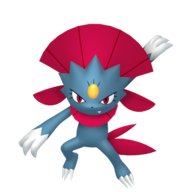 Weavile Weavile | DarkIce | Fake Out on a fast Triple Axel / Ice Shard revenge killer |
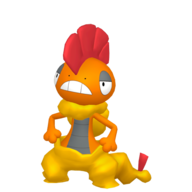 Scrafty Scrafty | DarkFighting | Bulky Fake Out with Intimidate and Fighting STAB |
 Raichu Raichu | Electric | Fake Out + Fake-Tears-style speed, niche Electric option |
Fake Out mind-games
Because both Fake Out users on the field can’t both flinch the same target usefully, and because the opponent *knows* you have Fake Out, it becomes a guessing game. Do they Protect the Pokémon you’d flinch (wasting your Fake Out) or eat it? A few habits sharpen the read:
- Fake Out the Pokémon that most wants to move, not just the fastest. Deny the Trick Room setter or the Protect-less attacker its turn.
- Don’t Fake Out into a likely Protect. If they’ll Protect the obvious target, click a real attack at the *other* foe instead and save the flinch.
- Fake Out chips a Focus Sash so your partner’s hit finishes: a clean two-move KO on a Sash lead.
- Ghost-types (Gholdengo, Sinistcha, Dragapult) are immune to Fake Out, so never aim it there.
Priority brackets: what actually moves first
Within a turn, moves resolve by priority bracket first, and only *inside* a bracket does Speed decide the order. That’s why Fake Out and Protect always go before attacks, and why a slow Pokémon with Sucker Punch or Aqua Jet can still strike first. Learn the brackets: most endgames are decided by who has priority, not who’s faster.
| Priority | Moves | Legal M-B user |
|---|---|---|
| +4 | Protect, Detect, Wide Guard, Spiky Shield | Almost everything |
| +3 | Fake Out | IncineroarWeavileKangaskhan-Mega |
| +2 | Extreme Speed |  Dragonite Dragonite Arcanine-Hisui Arcanine-Hisui |
| +1 | Sucker Punch, Aqua Jet, Bullet Punch, Ice Shard, Accelerock | Kingambit Azumarill Azumarill Scizor Scizor Mamoswine Mamoswine Lycanroc-Dusk Lycanroc-Dusk |
| +1 (status, Prankster) | Taunt, Tailwind, Encore, screens |  Grimmsnarl Grimmsnarl Whimsicott Whimsicott |
| 0 | Normal attacks and most moves | Everyone |
| −7 | Trick Room (sets last) |  Farigiraf Farigiraf Gardevoir-Mega Gardevoir-Mega |
Kingambit (base 50 Speed) is one of the format’s best Pokémon partly because Sucker Punch lets it hit first anyway, and Supreme Overlord makes it hit harder as your team faints. Priority is the great equaliser: it’s how a Trick-Room-less, slow attacker still closes games.
Speed control: the most important layer in doubles
Speed control is anything that changes who moves first, and it decides most games. There are four flavours, and good teams pick the one that matches their Pokémon. Slower, bulkier hitters want Trick Room; fast, aggressive teams want Tailwind; a single fast threat can borrow a Choice Scarf; and speed-drop moves slow the foe instead of speeding yourself.
| Tool | Effect | Duration | Best for | Legal M-B setters |
|---|---|---|---|---|
| Tailwind | Doubles your side’s Speed | 4 turns | Fast / offensive teams |  PelipperWhimsicott PelipperWhimsicott Staraptor Staraptor |
| Trick Room | Inverts Speed (slowest moves first) | 5 turns | Slow, bulky, hard-hitting teams | Farigiraf Hatterene Hatterene Cofagrigus Cofagrigus |
| Choice Scarf | One holder’s Speed ×1.5 | While held | A single fast cleaner / revenge killer | Any (item; the only Choice item in Champions) |
| Speed-drop moves | Lowers the foe’s Speed instead | Until switch | Softening a fast meta without committing a turn | Icy Wind, Electroweb, Bulldoze users |
Turn on Hints in Simulate and the Speed bars update the moment a Tailwind, a Choice Scarf, or a paralysis is in play, so you can watch the turn order flip in real time. It is the fastest way to feel how much these tools change who moves first.
Tailwind: your slow hitters suddenly move first
Tailwind doubles your whole side’s Speed for four turns. A mid-speed attacker that normally loses the race now moves first and KOs. The classic line: set Tailwind behind a Protect on turn one, then run over the field for the next three turns.
Trick Room: the slowest moves first
Trick Room inverts the Speed order for five turns: your slowest, hardest-hitting Pokémon act *first*. It is the counter-strategy to fast offense. Note it has −7 priority to set, so a faster Taunt or a KO on the setter stops it cold. Protect your setter and remove threats to it first. The premier M-B setter is Farigiraf, whose Armor Tail blocks the priority Taunts and Fake Outs that would otherwise deny it.
Choice Scarf: one Pokémon, ×1.5 Speed
Choice Scarf is the only Choice item legal in Champions (there is no Band or Specs). It multiplies one holder’s Speed by ×1.5, but locks it into the first move it picks until it switches. It’s how a single fast cleaner or revenge killer out-speeds the format without committing your whole team to a setter. In M-B you see it most on Basculegion (Scarf Last Respects / Wave Crash) and Hydreigon (Scarf Draco Meteor / Dark Pulse).
| Pokémon | Base Speed | Note |
|---|---|---|
 Aerodactyl-Mega Aerodactyl-Mega | 150 | Among the fastest in the format; great fast Tailwind lead |
| Dragapult | 142 | Out-speeds nearly everything unboosted |
| Whimsicott | 116 | Fast Prankster support: Tailwind / Encore first |
| Garchomp | 102 | The benchmark base-100 attacker |
| Charizard-Mega-Y | 100 | Ties the base-100 crowd; invest to win it |
| Basculegion | 78 | Slow, but Choice Scarf or rain fixes that |
| IncineroarSylveonFarigiraf | 60 | Bulky support tier: happy under Tailwind or in Trick Room |
| Kingambit | 50 | Very slow: a Trick Room and priority-Sucker-Punch monster |
 Torkoal Torkoal | 20 | Almost the slowest: the ideal Trick Room attacker |
Stat manipulation: setup and debuffs
You can change stats mid-battle: yours (setup) or theirs (debuffs). Doubles is the perfect place for it because your partner can cover you while you spend a turn boosting, or a redirector can eat the hit meant to interrupt you.
Setup: spend a turn to become a threat
A setup move trades your turn for a lasting stat boost. +2 moves (Swords Dance, Nasty Plot) double your attacking stat in one turn: explosive, but they do nothing else. Balanced setups (Dragon Dance, Quiver Dance, Calm Mind, Bulk Up) give smaller boosts across two stats, often including Speed or a defense, so you get tankier as you snowball. The catch: you took a turn off. Doubles makes that safe because your partner can cover you.
| Move | Boost | Style | Legal user |
|---|---|---|---|
| Swords Dance | +2 Attack | Explosive | Kingambit Gallade Gallade Ceruledge Ceruledge Scizor-Mega Scizor-Mega |
| Nasty Plot | +2 Sp.Atk | Explosive |  Gholdengo Gholdengo Delphox-Mega Delphox-Mega Salazzle Salazzle |
| Dragon Dance | +1 Attack / +1 Speed | Balanced | Dragonite Gyarados-Mega Gyarados-Mega |
| Quiver Dance | +1 Sp.Atk / +1 Sp.Def / +1 Speed | Balanced | 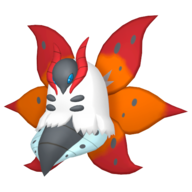 Volcarona Volcarona |
| Calm Mind | +1 Sp.Atk / +1 Sp.Def | Balanced | Sylveon Primarina Primarina Floette-Mega Floette-Mega |
| Bulk Up | +1 Attack / +1 Defense | Balanced |  Conkeldurr Conkeldurr Machamp Machamp Corviknight Corviknight |
| Belly Drum | +6 Attack (costs 50% HP) | All-in | Azumarill |
S-TIER SETKingambit
DefiantThe #1 Reg M-B pick, and the model setup sweeper. Sucker Punch + Kowtow Cleave + Iron Head + Low Kick off 135 Attack, holding a Chople Berry to survive the Fighting hit it fears. Defiant turns an Intimidate drop into +2 Attack, so debuffing it backfires. A Swords Dance behind Protect makes its priority Sucker Punch a game-ender.
Never set up into an open hit. Do it while your partner Protects the threat away, behind redirection (Rage Powder / Follow Me), or the turn a Fake Out buys you. That’s the difference between a free +2 and a wasted turn.
Debuffs: make the foe weaker instead
The mirror image of setup: instead of boosting yourself, you weaken the foe. The best of these is Intimidate, which drops the Attack of *both* opponents the instant its user switches in, for free value with no turn spent. Spread debuffs like Snarl soften a whole side’s special attackers; Parting Shot debuffs *and* pivots you to a better matchup. One warning: Defiant (Kingambit) and Competitive turn your debuff into a *+2 boost for them*, so don’t Intimidate into those.
| Effect | Move / ability | Legal user |
|---|---|---|
| −1 Attack to both foes on entry | Intimidate (ability) | Incineroar ArcanineStaraptorScrafty ArcanineStaraptorScrafty |
| −1 Sp.Atk to both foes (spread) | Snarl |  Tyranitar Tyranitar HydreigonIncineroar HydreigonIncineroar |
| −2 Attack | Charm |  ClefableSylveonWhimsicott ClefableSylveonWhimsicott |
| −1 Atk & −1 Sp.Atk + pivot out | Parting Shot | Incineroar |
| −1 Speed to both foes (spread) | Icy Wind |  Milotic Milotic Ninetales-Alola Ninetales-Alola Zoroark-Hisui Zoroark-Hisui |
Intimidate stacking, and who ignores it
Intimidate stacks: pivot two Intimidate users in and out and you can pile the foe’s Attack down to −2 (×0.5) or lower, effectively turning off a physical attacker. This is why Intimidate cores (Incineroar + a second Intimidate like Arcanine-Hisui) are so oppressive against physical offense. But a few things ignore or punish it, so know them before you switch in:
| Reaction | Effect | Legal M-B holder |
|---|---|---|
| Defiant | Turns the −1 into a +2 Attack boost | Kingambit |
| Competitive | Turns the −1 into a +2 Sp.Atk boost | Milotic |
| Special attackers | Intimidate only touches Attack, so special hits don’t care | GholdengoSylveonGardevoir-Mega |
| Ability shields / Armor Tail-adjacent | Some abilities block the drop entirely | situational |
Kingambit’s Defiant turns your Intimidate into a +2 Attack boost for it, the exact opposite of what you wanted. Against a Defiant/Competitive holder, hard-switch your Intimidate user in on something else, or bring your special attackers instead.
Helping Hand: from "maybe" to guaranteed
Helping Hand boosts your partner’s move by ×1.5 for the turn. It looks small, but it is exactly what turns a shaky damage roll (say, "KOs 60% of the time") into a guaranteed KO, removing the risk from a key removal. It’s free value on a support Pokémon that would otherwise Protect.
Legal M-B users: Sylveon, Farigiraf, Clefable.
Focus-fire: why it wins games
When both your attackers click the same target, you punch through bulk that a single hit can’t. But focus-fire is about more than raw damage. It’s about removing the right Pokémon *now*. Three targets you almost always double-focus:
- A Trick Room setter about to go off. A Farigiraf you leave alive flips the whole game under TR. KO it *this* turn, even if it costs both attackers.
- A bulky wall that survives one hit. Split damage and it lives to wall you again; combined damage removes it.
- A redirector or Fake Out user: the support piece holding the enemy plan together.
| Target | Why remove it immediately | How |
|---|---|---|
| Farigiraf (Trick Room) | Sets TR and flips the whole game if it lives | Both attackers, since it has huge HP |
| Incineroar | Fake Out + Intimidate + Parting Shot glues their team | Chip through Sitrus, then finish |
 Sinistcha (Rage Powder) Sinistcha (Rage Powder) | Redirects, so it protects their real threat | A spread move ignores it, or double it down |
| SylveonWhimsicott | Helping Hand / Tailwind / Encore support | Steel or Poison hit + a partner |
| Pelipper (rain) | Its Drizzle powers the whole rain plan | Remove it and rain expires in a few turns |
The S-tier threats you build around
The toolkit above isn’t abstract. It exists to beat the specific Pokémon defining Reg M-B right now. Here are the format’s top threats and the tool from this guide that answers each. Learn to recognise them on the open team sheet and you already know your plan.
| Threat | Why it’s scary | Your answer (from this guide) |
|---|---|---|
| Kingambit | Priority Sucker Punch + Supreme Overlord snowball; Defiant punishes Intimidate | A Fighting hit or Wide Guard; never Intimidate it |
| Charizard-Mega-Y | Drought sun + a 159 Sp.Atk spread Heat Wave | Wide Guard the Heat Wave; flip weather with rain |
| Garchomp | Base-102 spread Rock Slide + Earthquake pressure | Out-speed with speed control; Fake Out the lead |
| Incineroar | Fake Out + Intimidate + Parting Shot glue | Focus-fire it through Sitrus; don’t feed its pivots |
| Sylveon | Pixilate Hyper Voice spread that ignores redirection | A Steel (Kingambit / Gholdengo) walls it |
| Basculegion | Choice Scarf / rain sweeper with Last Respects | Bait the Scarf lock, then bring its check |
| Sneasler | Base-120 Fake Out + Close Combat / Dire Claw | Intimidate + priority; a Fairy or Psychic wall |
S-TIER OFFENSESneasler
UnburdenOne half of the format’s scariest pair (with Kingambit). Base 120 Speed plus Fake Out means it flinches and pressures from turn one, and Close Combat / Dire Claw off 130 Attack tears through the meta. Its Poison typing even lets Dire Claw spread status. Fast, disruptive, and hard to switch into. Respect it in Team Preview.
Take it to the ladder
That’s the toolkit. The Great Ball bot respects types and plays loose, so it’s the right place to practise sequencing a Fake Out into a focus-fire, or setting speed control behind a Protect. When it feels comfortable, the Ultra Ball guide adds the support-and-control layer: redirection, Wide Guard, Prankster, weather, Taunt, and pivoting.