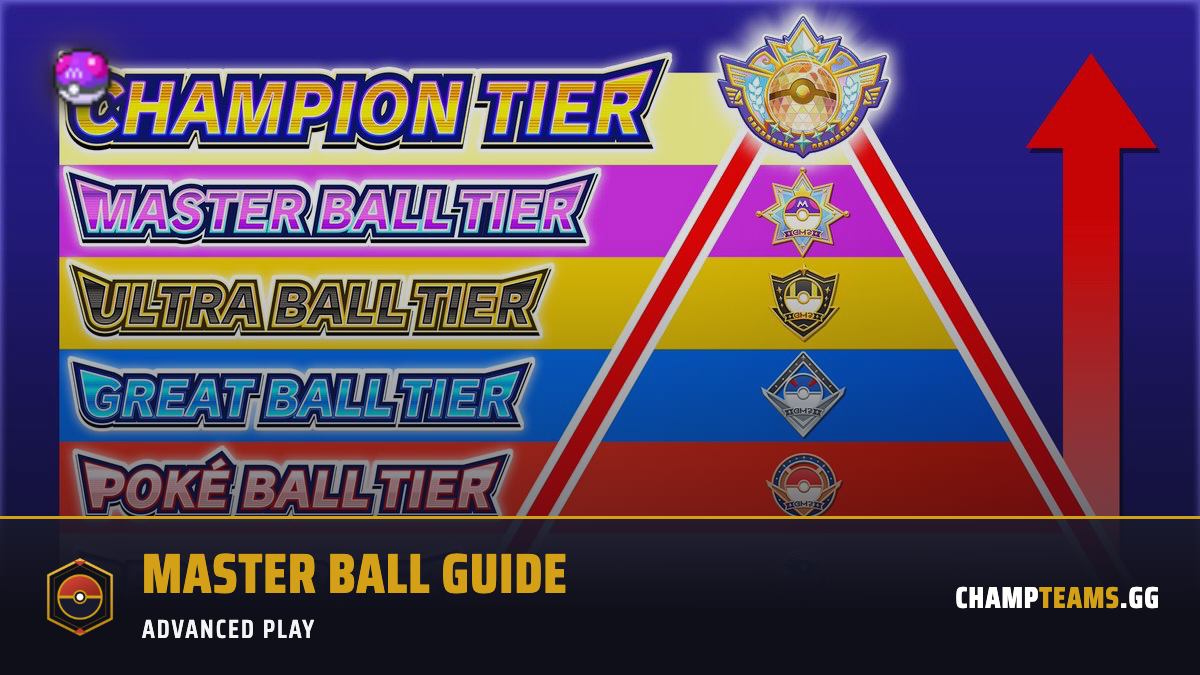
Advanced Play: the Master Ball guide
The advanced skills for Pokémon Champions doubles: identifying win conditions, prediction and reads, item deduction via the Item Clause, speed tiers and damage calc, and closing games with priority and sequencing.
Last updated · evergreen, updated as the meta evolves
The Master Ball bot plans ahead: it sets up win conditions and sequences its KOs, though it won’t read *you* the way a human does. This guide is about the skills that win the long game: knowing your win condition, predicting the opponent, reading items, using the speed chart, and closing cleanly.
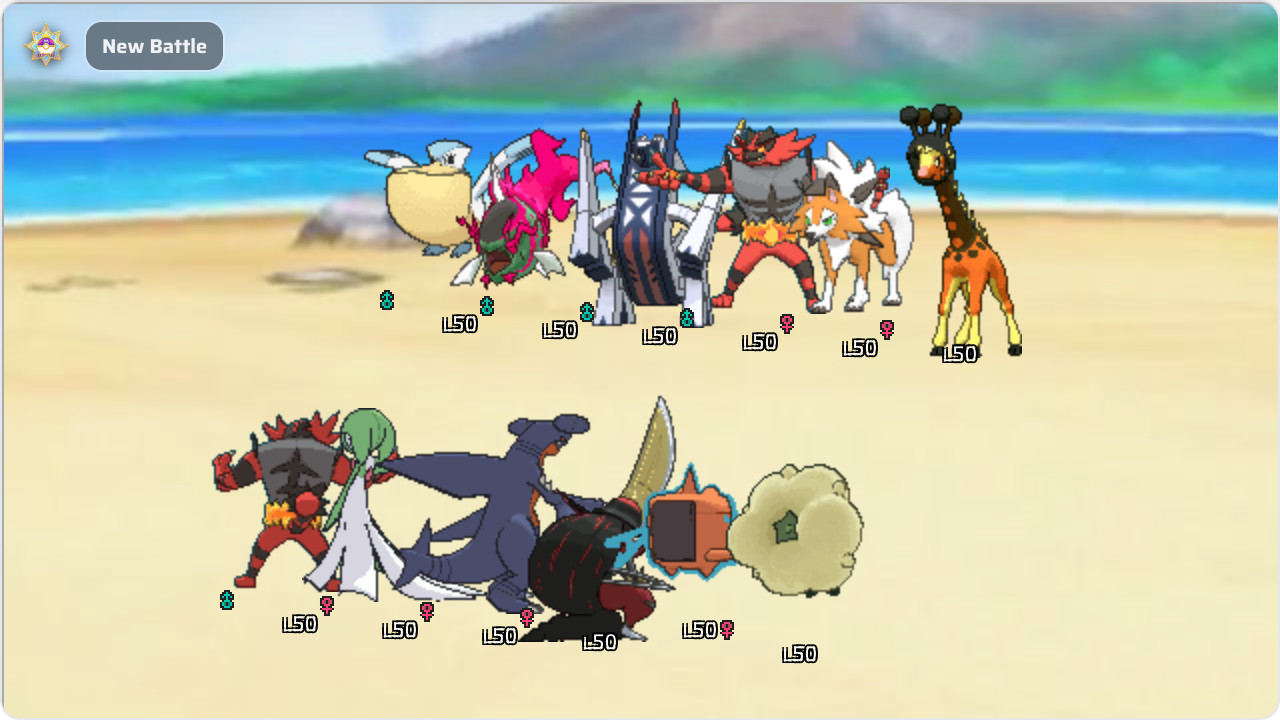
Win conditions & game plans
Your win condition is the Pokémon that actually *closes games*, usually a setup sweeper or a hard-hitting cleaner. Before the game starts, know which of your four is your win-con and identify two or three paths to letting it take over. Then play the early turns to set it up safely and clear its checks. Against a bot that won’t punish setup, this is almost free.
- Identify it in Team Preview: which Pokémon, if it gets going, ends the game?
- Clear its checks first: remove the Pokémon that would revenge-kill or wall it.
- Set up safely: behind Protect, redirection, or a Fake Out (see the Great Ball guide).
Prediction & reads
The highest-skill layer in doubles is prediction: playing the turn your opponent is *about to* make, not the one on the board. The cleanest example: a threat that will obviously Protect. Don’t feed it. Click its partner instead and turn the turn into a 2-on-1. Then punish the Protect next turn. Beware the over-prediction trap: if you always assume the fancy play, a simple opponent punishes you. Predict when the read is high-confidence; play safe otherwise.
50/50s: when you can’t know, minimise the loss
Some turns come down to a genuine 50/50: you can’t know whether the foe Protects or attacks, switches or stays. The mark of a strong player isn’t "winning" the guess; it’s structuring the turn so the wrong guess costs the least. Before you commit, ask: which of my two options survives *both* of their replies? Often a "safe" line, such as Protect one and chip with the other, keeps you alive through either branch, converting a coin-flip into a no-loss turn.
- Find the option that loses to neither reply. A double-Protect, or Protect-plus-safe-chip, often wins or ties both branches.
- Put the coin-flip on the turn you can afford it, not the turn your win-con is exposed.
- Make them guess instead. If you hold priority or redirection, you can force the 50/50 onto *them*, and you punish either choice.
- Don’t over-predict a bot or a simple opponent. Take the line that wins on average, not the flashy read.
Spread vs single-target: the damage math
A recurring decision: click a spread move (both foes, 75% power) or a single-target move (one foe, full power)? The answer is a quick bit of math. If a spread move KOs *both* foes, it’s almost always right: two KOs beat one. If it only KOs one and leaves the other healthy, a single-target hit that guarantees the KO you need (plus a partner move) is usually cleaner. Weigh the *total* damage and the *KOs secured*, not the raw number on the move.
| Situation | Click… | Why |
|---|---|---|
| Both foes in KO range of the spread | Spread | Two KOs in one move: the dream turn |
| One foe is a must-kill, spread won’t KO it | Single-target | Guarantee the removal you actually need |
| Foes at different HP, both chipped | Spread | Progress on both; your partner finishes one |
| A Wide Guard is likely up | Single-target | Spread gets blocked entirely, so don’t feed it |
| You’re racing a timer / need tempo | Spread | Pressure the whole side while you set up |
Item reads & the Item Clause deduction
What a Pokémon holds tells you how it plays. And because Champions has an Item Clause (no two Pokémon on a team share an item), you can *deduce* items you haven’t seen yet. Example: if you already saw their Whimsicott’s teammate holding Focus Sash, then the Whimsicott almost certainly *isn’t* Sash, so it’s more likely an Occa Berry or another type-resist berry (Champions has no Covert Cloak to hide behind).
| Item | What it signals | Play around it |
|---|---|---|
| Focus Sash | Frail attacker, guaranteed one action | Chip it first (Fake Out / spread), or hit twice |
| Life Orb | All-out attacker, self-chips each hit | It’s wearing itself down: stall / trade |
| Sitrus Berry | Wants to survive a hit and stay in | Two hits, or burst past the ~25% heal |
| Choice Scarf | ×1.5 Speed but locked into one move | Force it to lock, then switch the answer in |
| Type-resist berry (Occa, Chople, Kasib…) | Survives one specific super-effective hit | Hit it with your *other* type |
| Mystic Water / Charcoal / Fairy Feather | Boosts one attacking type | Tells you its main STAB |
| Mega Stone (Charizardite Y, Gardevoirite…) | That Pokémon is the team’s Mega, locked to it | Only one Mega per team; account for its boosted form |
With Hints on in Simulate, the opponent-team panel lists the bot’s full six with their items and sets, and marks each move with a check the moment you have seen it used. It does the open-sheets bookkeeping for you, so you can spend your read on the item you have not seen yet.
| Pokémon | Most common item | What it means |
|---|---|---|
 Kingambit Kingambit | Chople Berry | It expects a Fighting hit and will live one, so don’t rely on Low Kick / Close Combat to OHKO |
 Sylveon Sylveon | Fairy Feather | Its Hyper Voice hits even harder than raw, so respect the spread damage |
 Garchomp Garchomp | Sitrus Berry / Choice Scarf | If it out-speeds something it shouldn’t, assume Scarf and it’s move-locked |
 Basculegion Basculegion | Choice Scarf | Fast but locked: bait the lock, then bring in its check |
 Incineroar Incineroar | Sitrus Berry | Wants to stay in and pivot repeatedly: chip past the heal to remove it |
 Whimsicott Whimsicott Aerodactyl Aerodactyl | Focus Sash | Guaranteed to live one hit and set Tailwind: chip it first |
Speed tiers & damage calc
At the top level you plan two turns ahead, and that means knowing the speed chart and the damage calc. The speed chart tells you who out-speeds whom (and whether you win a mirror by one point of investment); the damage calc tells you whether a hit is a guaranteed KO or a roll. Together they let you set up KO windows and speed windows *before* they happen: "if I Tailwind now, my Kingambit out-speeds their Garchomp and OHKOs it next turn."
| Pokémon | Base Spe | Scarf ×1.5 | Tailwind ×2 |
|---|---|---|---|
 Aerodactyl-Mega Aerodactyl-Mega | 150 | n/a | n/a |
 Dragapult Dragapult | 142 | n/a | n/a |
| Whimsicott | 116 | n/a | n/a |
 Lycanroc-Dusk Lycanroc-Dusk | 110 | ~247 | ~330 |
| Garchomp | 102 | ~229 | ~306 |
 Charizard-Mega-Y Charizard-Mega-Y | 100 | ~225 | ~301 |
| Basculegion | 78 | ~195 (its usual Scarf line) | ~260 |
| Kingambit | 50 | n/a | ~204 |
 Torkoal Torkoal | 20 | n/a | stays slow (wants Trick Room) |
The chart is only useful when you *act* on it: "if I click Tailwind now, my Kingambit (~204 under Tailwind) out-speeds their Garchomp next turn and my Iron Head OHKOs it." Pair the speed line with a damage calc and you’ve planned two turns of KOs before they happen. Check the live version on the tier list.
Mega Evolution: your one big swing
Champions gives each team one Mega Evolution per battle, through the Omni Ring. You declare it the turn you want it, and that Pokémon transforms *before* moves resolve, gaining a new form with higher stats and often a new ability. Because you only get one, deciding *which* Pokémon Megas and *when* is a real strategic choice. Mega early to win a speed race or power through a wall; hold it if the Mega form is your late-game closer and you don’t want to reveal it. Note the base form still shows on the open team sheet, so the opponent knows your Mega. The surprise is only in the timing.
| Mega | Payoff | When to pull the trigger |
|---|---|---|
| Charizard-Mega-Y | Drought sun + 159 Sp.Atk Heat Wave | Turn one, since you want the sun up immediately |
| Aerodactyl-Mega | 150 Speed, fast Tailwind + Rock Slide | Early, to win the speed lead |
 Gardevoir-Mega Gardevoir-Mega | Huge Sp.Atk Hyper Voice / Trick Room | When you can fire or set TR safely behind support |
 Scizor-Mega Scizor-Mega | Technician Bullet Punch, +Def | When you need priority + bulk to close |
 Kangaskhan-Mega Kangaskhan-Mega | Parental Bond double-hits | Early: it breaks Sashes and pressures both slots |
Counting: the skill that wins endgames
The best players are always counting: tracking exactly which Pokémon and resources are left on both sides, and mapping the game to its end before it happens. In a bring-4 format, once a few Pokémon are down you can often see the whole finish: "I have priority + a faster mon, they have two slower attackers and no Protect left on the threat, so I win in two turns." Counting turns a chaotic board into a solved puzzle.
| Count this | Why it matters |
|---|---|
| Whose Mega is still available | One Mega per team: an un-used Mega is a hidden power spike |
| Speed control turns remaining | Tailwind (4) / Trick Room (5): race to act inside the window |
| Priority moves on the board | A priority KO closes past any Speed: count who still has one |
| Protect reliability | Repeated Protects fail (100→33→11%), so the foe can’t stall forever |
| Weather / screen timers | Know the exact turn rain, sun, or a screen expires |
Position advantage: the lead that isn’t on the scoreboard
You can be even on Pokémon but ahead in position, and position is what actually wins. A healthy win-con on the field with its checks removed, speed control ticking, and your opponent forced to react is a winning position even at 2-vs-2. Chase *position*, not just KOs: sometimes the strongest turn is a Protect + pivot that leaves you perfectly set, not a trade that removes a Pokémon but exposes your closer.
- A safe win-con beats an extra KO. Trading your closer for a filler is a losing trade even if the HP math looks even.
- Force them to react. When the opponent is always answering your threat, you dictate the game. That’s position.
- Bank your Mega and priority as position: an un-spent Mega or a held Sucker Punch is a threat that shapes their choices.
- Don’t over-extend. A greedy KO that puts your win-con in range of their revenge killer throws the position away.
You’ve topped the ladder
Win conditions, prediction, item reads, speed tiers, and clean closing are the skills that carry into real ladder and tournament play. From here it’s reps, and building your own teams. Head to the teambuilding guides to turn this knowledge into a team of your own.
Beyond the guide: what actually makes you a better player
Here’s the honest part, and the note this whole ladder ends on. Everything in these four guides is *knowledge*, and knowledge is the price of entry, not the thing that wins. Past a certain point, every strong player knows the same speed tiers, the same item reads, the same lines. What separates them isn’t a secret trick you can be handed; it’s reps, review, and preparation. You get better by playing a lot of games, then, the part almost everyone skips, reviewing the ones you lost and asking not "did it work?" but "was that the right decision with the information I had?" A loss to a bad beat can be a perfect game; a win can be a mistake that happened to pay off. Judge the *decision*, not the *result*, and your play compounds.
| Habit | Why it moves the needle |
|---|---|
| Volume of games | Reps build the pattern-recognition that lets you see lines instantly, under the clock |
| Reviewing your losses | The single highest-value habit: most improvement is spotting the turn you were actually wrong |
| Preparation & a testing gauntlet | Pre-calc your KOs and practise against the meta’s real pillars, not random ladder noise |
| Matchup notes by archetype | Teams change weekly; archetype logic (Tailwind, TR, rain, pivot spam) persists, so organise by shape |
| Decision-quality journaling | Separate outcome from decision so variance stops distorting what you learn |
How hard is reaching Champion rank, really?
Straight answer: very. Champion is the literal top of the ladder, above Master Ball, and there is no guide, this one included, that "gets you there" if you just follow the steps. It is a long grind of consistency, not a checklist. The players who reach it aren’t the ones who found a spicy tech; they’re the ones who played hundreds of games, lost, reviewed, tuned, and showed up again the next day making slightly fewer mistakes. Aim for it, but understand you’re aiming at *sustained* good play across a huge sample, where one flawless game means almost nothing and a bad tilt-streak can cost you a week of climbing.
The gap between the very best and a strong Master-Ball player is almost never a single move; both know the tricks in this guide. It’s consistency (they rarely misplay the "easy" turns), deeper matchup and tech knowledge (they know the exact spread and item on the team you’re facing), disciplined reads (they predict only when the read is high-confidence and take the safe line otherwise), and not tilting (a bad beat doesn’t leak into their next three games). Elite play is mostly the absence of mistakes, sustained over a long day.
The last frontier: LAN & in-person tournaments
The online ladder is Best-of-1: one game, one shot, high variance. In-person tournaments are a different sport. Rounds are Best-of-3 with open team sheets, so after game one both players adjust: you can bring a different four, change your leads, and exploit what you learned. There are no reconnects and no rage-quits; a misclick or a dropped connection is just a loss. And you play a *long day*, often many rounds back to back, so stamina, nerves, and focus become real skills. You’re also sitting across from a human: you can read their hesitation, their confidence, the way they snap-lock a turn, and they can read you.
| Factor | Online ladder | LAN / in-person |
|---|---|---|
| Format | Best-of-1: one high-variance game | Best-of-3: adapt across games, variance shrinks |
| Between games | None; next opponent | Sideboard your four, change leads, counter what you saw |
| Disconnects | Reconnect / ladder forgives | No reconnects: a slip is a game loss |
| The opponent | A screen name | A person you can read, and who reads you |
| Endurance | Play when you feel fresh | A long day of rounds: sleep, food, and nerves matter |
None of that is a reason to be intimidated. It’s the reason it’s worth doing. The ladder sharpens your mechanics; a Best-of-3 set against a live opponent is where the mind games, preparation, and mental game you’ve built actually get tested. Play the reps, review the losses, prepare for the field, and keep a level head across the day. That’s the whole game. Good luck out there. We’ll see you at the top.