Doubles Fundamentals: the Poké Ball guide
The absolute basics of Pokémon Champions doubles: 2v2 targeting, bring-6-pick-4 team preview, type matchups, Speed, Protect, and spread moves, with verified in-battle clips.
Last updated · evergreen, updated as the meta evolves
Pokémon Champions is a doubles game: two Pokémon per side, on the field at once. That one fact changes everything about how you play compared to the single battles from the main series. This guide assumes you are brand new and walks every basic rule from the ground up: what a doubles battle is, how targeting works, what a type is, what Speed and PP do, what happens at 0 HP, Protect, and spread moves. Master these and you already beat the Poké Ball bot, which just attacks.
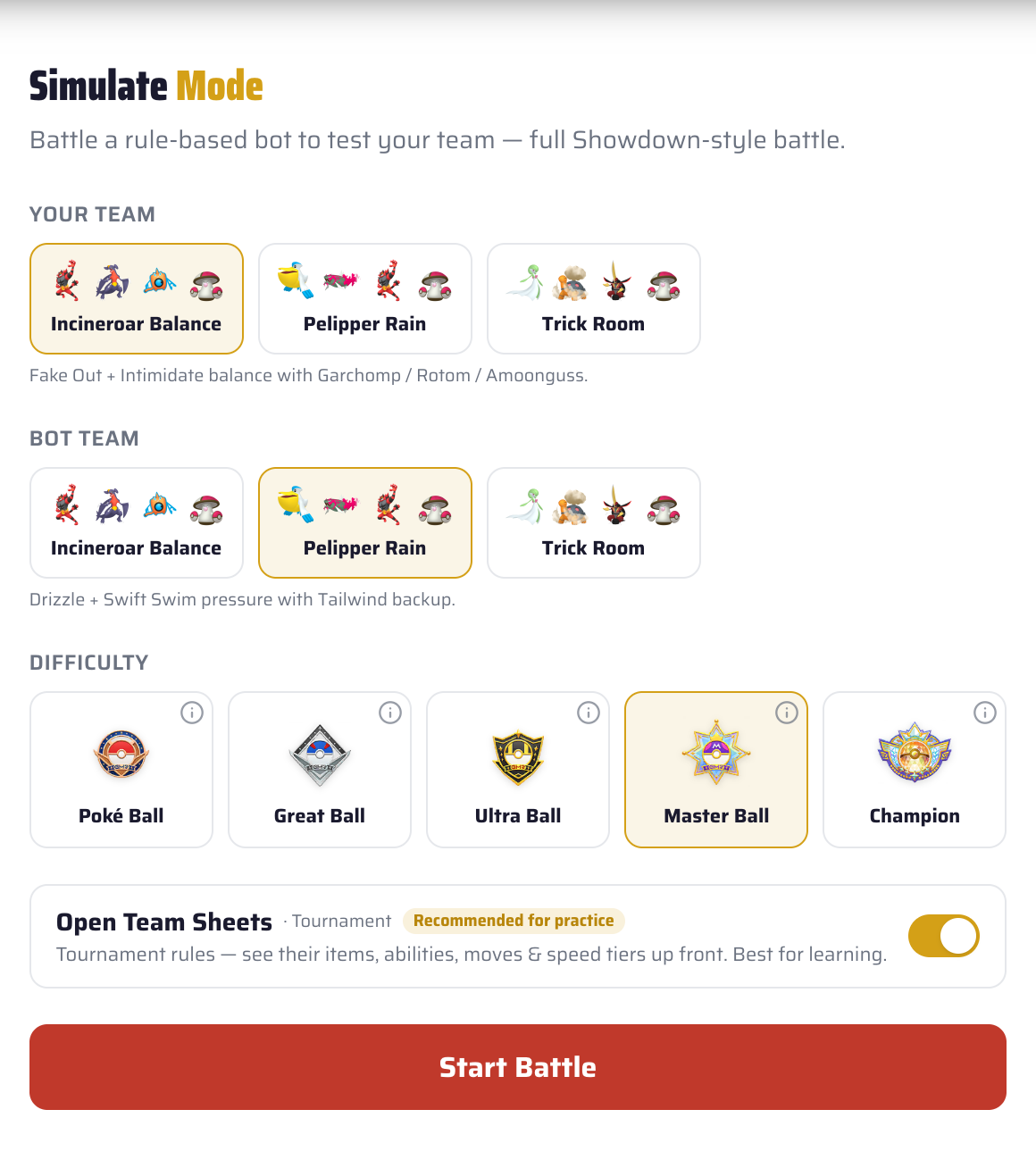
Every concept below has a short clip from Simulate Mode. The Poké Ball bot only clicks damage, no tricks, so it is the perfect sparring partner for the basics. Jump in whenever you want to try a concept yourself.
What a doubles battle actually is
A double battle puts two of your Pokémon on the field at the same time, facing two of the opponent’s. Every turn, you give an order to *both* of your Pokémon, the opponent does the same in secret, and then all four moves resolve in one go, fastest first. You never see the opponent’s orders before you lock yours in, so doubles is a game of reading intentions, not reacting to them.
- The field: your two Pokémon sit on the left, the opponent’s two on the right. Positions are called *slots*: your slot 1 and slot 2, their slot 1 and slot 2.
- Every turn you make two choices, one order per Pokémon. A Pokémon can attack, use a status move, switch out, or (rarely) do nothing.
- Both sides choose at once, then the turn plays out. There is no "your turn / my turn". It is simultaneous.
- A Pokémon at 0 HP faints and leaves the field; you send out a replacement from your bench (if you have one).
- You win when all of the opponent’s chosen Pokémon have fainted (in Champions, that means their four, see below).
Bring six, pick four: Team Preview
In Reg M-B you build a team of six Pokémon but only four battle. At the start of every game you see both full teams (this is Open Team Sheets, so nothing is hidden) and you get 90 seconds of Team Preview to choose which four you bring and which two of those four you lead with. This is the single most important decision in the game: you pick your four for the matchup in front of you. A team that struggles into rain brings its rain answers; a team facing Trick Room brings its Taunt user and leaves its own slow attackers on the bench.
| Rule | What it means |
|---|---|
| Double battle | Two Pokémon per side on the field at once |
| Bring 6, pick 4 | Build six; choose four at Team Preview |
| Level 50 | Every Pokémon is set to Level 50, so stats are fixed and comparable |
| Open Team Sheets | You see the opponent’s full six before the game starts |
| Species Clause | No two Pokémon of the same species on a team |
| Item Clause | No two Pokémon holding the same item |
| Mega Evolution | One Pokémon may Mega Evolve, once per battle, via the Omni Ring |
| No Terastallization | Tera does not exist in Champions |
| Timer | 90s Team Preview, 45s per turn, 7 min of your own clock |
- Leads set the tone. Your first two Pokémon should be safe into most of the opposing six; you can bring your riskier picks off the back and switch them in later.
- You don’t have to bring your "best" four. You bring the four that beat *their* four.
- Save your hard answers for the back. If you lead them, the opponent plays around them; kept in reserve, they punish.
Read left-to-right: your six, then the four you *bring* (highlighted), then your *lead* pair. The rule of thumb: lead with your safest, most flexible pair; save your hard answers for the back.
At Team Preview in Simulate, turn on Hints and the "Who to bring" panel suggests your best four against the bot’s six. Use it as a starting point, then adjust for the specific threats you see, and the picks start to make sense.
Targeting: you choose where every hit lands
Because there are two foes, most attacks ask which target you want. This is the skill that does not exist in single battles: a single-target move can hit either foe (or, for some moves, your own ally), and you decide. Point your super-effective move at the Pokémon it is super-effective against; gang both attackers onto one foe to punch through its bulk (that’s focus-fire, covered in the Great Ball guide). Some moves don’t ask: they hit everything.
| Move type | What it hits | Examples |
|---|---|---|
| Single-target | One foe you choose | Flare Blitz, Moonblast, Sucker Punch |
| Spread (both foes) | Both opponents at once, 75% power | Heat Wave, Rock Slide, Earthquake, Make It Rain |
| Ally-targeting | Your own partner (to help it) | Helping Hand, Follow Me (draws to self) |
| Field / self | The whole field or the user | Trick Room, Tailwind, Protect, Swords Dance |
Types & the type chart: check before you click
Every Pokémon has one or two types (its typing), and every attack has one type. The relationship between the attack’s type and the target’s typing decides the damage multiplier. Super-effective hits deal 2× (4× if the target is weak to that type on *both* of its types); resisted hits deal ½ (¼ if it resists on both); and some matchups deal nothing at all, an immunity. The classic beginner trap: clicking an Electric move into a Ground type. It does *zero*. Always glance at the matchup before you lock a move.
Turn on Hints in Simulate and it shows a live damage range for each of your moves against each foe, so you can see which hit lands super-effective and which does nothing before you click. Greens mean the move can KO. It is your damage calc without any of the math.
| Matchup | Multiplier | Meaning |
|---|---|---|
| Doubly super-effective | 4× | Weak on both types, often an instant KO |
| Super-effective | 2× | Weak: pick this move |
| Neutral | 1× | Normal damage |
| Resisted | ½× | Chip only, usually avoid |
| Doubly resisted | ¼× | Almost nothing |
| Immune | 0× | Does literally nothing, never click it |
| Attack type | Does nothing to | Why |
|---|---|---|
| Ground | Flying(and Levitate) | They’re not on the ground |
| Electric | Ground | Grounded, so Electric can’t path to them |
| NormalFighting | Ghost | Ghosts phase through |
| Ghost | Normal | The reverse also holds |
| Poison | Steel | Steel can’t be poisoned or hit by Poison |
| Psychic | Dark | Dark is immune to Psychic |
| Dragon | Fairy | Fairy is flat immune to Dragon |
Here is the full type chart for reference: every attacking type (rows) against every defending type (columns). There is also a standalone Champions Type Chart → you can bookmark.
| ATK ↓ / DEF → | NOR | FIR | WAT | ELE | GRA | ICE | FIG | POI | GRO | FLY | PSY | BUG | ROC | GHO | DRA | DAR | STE | FAI |
|---|---|---|---|---|---|---|---|---|---|---|---|---|---|---|---|---|---|---|
| NOR | ½ | 0 | ½ | |||||||||||||||
| FIR | ½ | ½ | 2 | 2 | 2 | ½ | ½ | 2 | ||||||||||
| WAT | 2 | ½ | ½ | 2 | 2 | ½ | ||||||||||||
| ELE | 2 | ½ | ½ | 0 | 2 | ½ | ||||||||||||
| GRA | ½ | 2 | ½ | ½ | 2 | ½ | ½ | 2 | ½ | ½ | ||||||||
| ICE | ½ | ½ | 2 | ½ | 2 | 2 | 2 | ½ | ||||||||||
| FIG | 2 | 2 | ½ | ½ | ½ | ½ | 2 | 0 | 2 | 2 | ½ | |||||||
| POI | 2 | ½ | ½ | ½ | ½ | 0 | 2 | |||||||||||
| GRO | 2 | 2 | ½ | 2 | 0 | ½ | 2 | 2 | ||||||||||
| FLY | ½ | 2 | 2 | 2 | ½ | ½ | ||||||||||||
| PSY | 2 | 2 | ½ | 0 | ½ | |||||||||||||
| BUG | ½ | 2 | ½ | ½ | ½ | 2 | ½ | 2 | ½ | ½ | ||||||||
| ROC | 2 | 2 | ½ | ½ | 2 | 2 | ½ | |||||||||||
| GHO | 0 | 2 | 2 | ½ | ||||||||||||||
| DRA | 2 | ½ | 0 | |||||||||||||||
| DAR | ½ | 2 | 2 | ½ | ½ | |||||||||||||
| STE | ½ | ½ | ½ | 2 | 2 | ½ | 2 | |||||||||||
| FAI | ½ | 2 | ½ | 2 | 2 | ½ |
- Doubly-weak = 4×. Weavile (Dark/Ice) takes 4× from Fighting; a Bug/Steel like Scizor takes 4× from Fire.
- Some abilities create immunities too: Levitate (immune to Ground), Lightning Rod (immune to Electric, and it even redirects it), Flash Fire (immune to Fire).
- STAB ("Same-Type Attack Bonus"): a move that matches the user’s type deals 1.5×. That’s why a Fire-type’s Fire move hits harder than the same move on a non-Fire user.
- Pick the move that lands, not the one with the biggest base number.
HP, fainting, PP & switching: the turn-to-turn basics
A few mechanical rules govern every turn. HP (Hit Points) is a Pokémon’s health; when it reaches 0 HP the Pokémon faints, leaves the field, and you send in a replacement from your bench. PP (Power Points) is how many times a move can be used. Most attacks have 5 to 15 uses, so you can’t spam the same move forever (this is why Protect stalling eventually forces a switch). Switching swaps an active Pokémon for a benched one; switches happen *before* attacks, so a switch dodges a slower hit but eats a faster one.
- 0 HP means a faint. The Pokémon is out of the game; bring in a replacement. Lose all four you brought and you lose the match.
- PP limits your moves. Run out of PP on every move and the Pokémon is forced to use Struggle (a self-damaging flail). You’ll rarely see it, but it’s why stall works.
- Switching resets some things: stat drops and boosts, Intimidate, Fake Out availability, and confusion all reset on a switch. Weather and Trick Room do not.
- Switches go first. If you switch, it happens before any attack that turn. That’s useful to dodge a predicted hit, and risky if the incoming Pokémon is slower than the foe.
- Status conditions (burn, poison, paralysis, sleep, freeze) persist and chip or hinder: burn halves physical damage, paralysis quarters Speed, sleep skips turns.
Physical vs Special: which defense a hit checks
Attacks are either Physical (checked by the target’s Defense) or Special (checked by its Special Defense). A Pokémon can be very hard to hit on one side and easy on the other. Snorlax has enormous Special Defense but middling Defense, so you break it with a strong *physical* hit, not a special one. Knowing which side a wall is soft on tells you which of your attackers to point at it. As a rule of thumb, contact/melee moves (punches, tackles, blades) are physical and elemental beams/blasts (Flamethrower, Thunderbolt, Moonblast) are special, but always check the move’s category, not its flavour.
| Target | Def / Sp.Def | Walls… | Breaks with… |
|---|---|---|---|
 Snorlax Snorlax | Low Def / High Sp.Def | Special attacks | A hard physical hit (Close Combat, Flare Blitz) |
 Corviknight Corviknight | High Def / Mid Sp.Def | Physical attacks | A strong special hit (Fire / Electric special) |
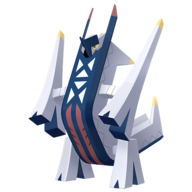 Archaludon Archaludon | Very high Def / Low Sp.Def | Physical attacks | Special coverage (special Fighting / Ground) |
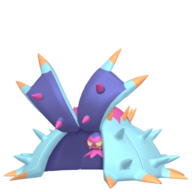 Toxapex Toxapex | High both, slightly softer special | Most single hits | Stack chip, or a strong special STAB |
 Gardevoir Gardevoir | Low both | Nothing, it’s frail | Any super-effective hit OHKOs |
How Speed works: faster acts first
Within a turn, once switches and Mega Evolution are done, moves resolve fastest Pokémon first. At Level 50 every stat is a fixed number, so Speed is something you can plan around exactly. Out-speeding a threat means you can KO it *before it ever acts*, the cleanest tempo you can get. If two Pokémon have the *exact* same Speed, the game flips a coin (a Speed tie) to decide who goes first, which is why players invest a single extra Speed point to win a mirror outright. Much of competitive play is a fight over who moves first, which is why speed control (next guide) is so powerful.
In Simulate, turn on Hints to see the exact turn order for your matchup, the same Speed picture this section describes. The Speed bars rank every Pokémon on the field fastest to slowest, so you can tell at a glance who moves first before you lock a move.
Some moves have priority: they go before normal moves no matter the Speed. Fake Out (+3) and Protect (+4) go first; Sucker Punch, Aqua Jet, Bullet Punch, Ice Shard (+1) let a slow Pokémon still strike first. A priority move is how a slow Pokémon closes a game against a faster one, and you’ll use this constantly at higher tiers.
Protect: why nearly every Pokémon runs it
Nearly every Pokémon in VGC runs Protect, and for good reason. In doubles you are often out-numbered on a single Pokémon for a turn, and Protect makes that Pokémon untouchable for the turn while its partner removes the danger. It also scouts (does the foe waste a big move into it?), stalls weather / Trick Room / Tailwind timers down, blocks Fake Out, and buys chip from status to tick. It is not a passive move. It is a tempo tool that shows up in nearly every turn of a real game.
- Protect one, attack with the other. The core doubles pattern: the threatened Pokémon Protects while its partner deals with the threat.
- Scout with it. A Protect on a Pokémon the opponent wants to KO wastes their big move, and you learn their plan for free.
- Stall timers. Weather lasts 5 turns, Tailwind 4, Trick Room 5. Protect burns those turns while you take no risk.
Protect gets less reliable each time you use it in a row (roughly 100%, then 33%, then 11%). Use it to answer a specific threat, not as a reflex every turn. A good opponent reads a habitual Protecter and clicks past it.
Spread moves: hit both foes (at 75%)
Moves that hit both opponents (Heat Wave, Rock Slide, Earthquake, Make It Rain, Eruption, Dazzling Gleam, Icy Wind) deal 75% damage in doubles instead of their full single-target power. That trade is almost always worth it: you are getting damage on *two* Pokémon at once. Spread moves win games by clearing two weakened threats in a single click, by pressuring a whole side while your partner sets up, or by picking off Focus Sash / low-HP Pokémon on both slots.
| Move | Type | Note | Legal M-B user |
|---|---|---|---|
| Heat Wave | Fire | Special, hits both foes |  Charizard-Mega-Y Charizard-Mega-Y Torkoal Torkoal |
| Rock Slide | Rock | Physical, 30% flinch chance on each |  Garchomp Garchomp Aerodactyl-Mega Aerodactyl-Mega Tyranitar Tyranitar |
| Earthquake | Ground | Hits both foes AND your own ally | Garchomp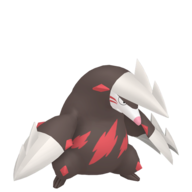 Excadrill Excadrill Mamoswine Mamoswine |
| Make It Rain | Steel | Special, drops the user’s Sp.Atk after |  Gholdengo Gholdengo |
| Eruption | Fire | Weaker as the user loses HP; huge at full | Torkoal |
| Dazzling Gleam | Fairy | Special, safe (no ally hit) | Gardevoir Sylveon Sylveon Whimsicott Whimsicott |
A few spread moves (Earthquake, Surf, Discharge) hit *everything on the field*, including your own partner. Pair them with a Flying-type, a Levitate holder, or a partner that Protects the turn you click it.
Stats and stat points: what each stat does
Every Pokémon has six stats (HP, Attack, Defense, Sp.Atk, Sp.Def, Speed) and you customise them with stat points (66 to spend, max 32 in any one stat) and a Nature (which raises one stat 10% and lowers another). Champions has no IVs, so every Pokémon starts from the same base and the points are all you tune. Where you invest decides the Pokémon’s role. You don’t need to master spreads yet. Just know that an "attacker spread" and a "support spread" are built from the same points but do completely different jobs.
| Role | Typical investment | What it achieves |
|---|---|---|
| Attacker | 32 Atk (or Sp.Atk) / 32 Spe + boosting nature | Out-speeds and KOs: pure offense |
| Bulky support | 32 HP / 32 in one defense | Survives to Fake Out, redirect, or set speed control |
| Trick Room attacker | 32 HP / 32 Atk, 0 Speed + a Speed-lowering nature (Brave / Quiet) | Slow on purpose, so it moves first under Trick Room |
| Fast glass cannon | 32 Sp.Atk / 32 Spe, frail | Highest damage, dies to anything back |
Status conditions: chip and shut-down
A status condition sticks to a Pokémon and hinders it every turn until it switches out (or is cured). Only one non-volatile status can be on a Pokémon at a time. Knowing what each does, and which of your Pokémon *want* to spread one, is a big part of doubles. Burn and paralysis are the two you’ll inflict and fear most: burn guts a physical attacker, paralysis wrecks a fast one.
| Status | Effect | Inflicted by (legal M-B) |
|---|---|---|
| Burn | Halves physical damage + chips ~1/16 HP each turn | Will-O-Wisp, Flare Blitz, Scald / Sacred Fire users |
| Paralysis | Cuts Speed to 50% + 25% chance to be fully stopped | Body Slam, Nuzzle, Glare users |
| Poison | Chips ~1/8 HP each turn (Toxic ramps up) | Poison Jab, Sludge Bomb, Toxic users |
| Sleep | Can’t act for 1 to 3 turns (Spore is the worst) | Yawn, Hypnosis, Spore (few legal setters) |
| Freeze | Can’t act until it thaws (rare, luck-based) | Ice moves with a small freeze chance |
A burn turns a physical monster like Kingambit or Garchomp into a half-power version of itself, which is why bulky Fire-types and Will-O-Wisp are so valued. Paralysis from a Body Slam can drop a fast sweeper below your team’s Speed *and* randomly stop it for a turn. Spreading status is one of the cheapest ways to win a game.
Stat stages: boosts and drops are multipliers
On top of a Pokémon’s base stats, moves and abilities apply stat stages: temporary steps up or down, from −6 to +6, that reset when the Pokémon switches out. Each stage is a fixed multiplier: +1 is ×1.5, +2 is ×2, and on the way down −1 is ×0.66, −2 is ×0.5. This is why a Swords Dance (+2 Attack, ×2) or an Intimidate (−1 Attack, ×0.66) swings a KO so hard. They’re not small nudges, they’re large multipliers.
| Stage | Multiplier | Example |
|---|---|---|
| +2 | ×2.0 | Swords Dance / Nasty Plot: double your attacking stat |
| +1 | ×1.5 | Dragon Dance Attack, a single Calm Mind step |
| 0 | ×1.0 | The default, un-boosted stat |
| −1 | ×0.66 | Intimidate on entry: a big defensive swing |
| −2 | ×0.5 | Charm / two Intimidates: halves the foe’s Attack |
| −6 | ×0.25 | The floor: rarely reached, but total shutdown |
Critical hits: the 1-in-24 spike
A critical hit deals 1.5× damage and, importantly, ignores the target’s defensive boosts and your own offensive drops, so a crit punches through a Calm Mind wall or an Intimidated attacker. The base rate is 1 in 24 (about 4%), so you can’t rely on it, but you should be aware of it: a "guaranteed survive" can still fall to a crit, and some moves raise the odds. Play for the average roll, but know the spike exists.
Weather: the field-wide multiplier (a first look)
Weather changes the whole field for five turns and is one of the biggest damage multipliers in the game. You’ll build entire teams around it later (see the Ultra Ball guide), but the basics belong here: rain boosts Water and weakens Fire; sun boosts Fire and weakens Water; sand and snow boost their own types’ defenses and can power specific abilities. A single weather setter can make your whole team hit much harder.
| Weather | Boosts | Legal M-B setter |
|---|---|---|
| Rain | Water ×1.5, weakens Fire |  Pelipper (Drizzle) Pelipper (Drizzle) |
| Sun | Fire ×1.5, weakens Water | Torkoal (Drought)Charizard-Mega-Y |
| Sand | Rock Sp.Def ×1.5 + chip | Tyranitar (Sand Stream) |
| Snow | Ice Defense ×1.5 |  Ninetales-Alola (Snow Warning) Ninetales-Alola (Snow Warning) |
Abilities 101: the passive that’s always on
Every Pokémon has one ability, a passive effect that’s always active. Abilities decide more matchups than any single move. Some create immunities (Levitate dodges Ground, Flash Fire dodges Fire), some set weather on entry (Drizzle, Drought), some punish attackers (Rough Skin), and some, like Intimidate, hand you free value just by switching in. Always read the opponent’s abilities on the open team sheet before you commit to a plan.
| Ability | Effect | Legal M-B holder |
|---|---|---|
| Intimidate | Drops both foes’ Attack −1 on entry |  Incineroar Incineroar Arcanine-Hisui Arcanine-Hisui |
| Drizzle / Drought | Sets rain / sun on entry | PelipperTorkoal |
| Good as Gold | Immune to the opponent’s status moves | Gholdengo |
| Levitate | Immune to Ground moves |  Hydreigon Hydreigon |
| Armor Tail | Blocks priority moves aimed at your side |  Farigiraf Farigiraf |
| Swift Swim | Doubles Speed in rain |  Basculegion Basculegion |
| Multiscale | Halves damage taken at full HP |  Dragonite Dragonite |
Held items: a free effect all game
Each Pokémon can hold one item, and because of the Item Clause no two on your team can share one. Items are how you tune a Pokémon: a berry to survive a hit, a Life Orb to hit harder, a Focus Sash to guarantee one action. Champions has a *curated* item pool (see the callout), so learn the ones you’ll actually use.
| Item | Effect | Best on |
|---|---|---|
| Life Orb | +30% damage, but self-chips ~10% each hit | All-out attackers |
| Sitrus Berry | Heals ~25% HP once, when below half | Bulky pivots and setup mons |
| Focus Sash | Survives one KO hit at 1 HP (from full) | Frail leads / Tailwind setters |
| Choice Scarf | ×1.5 Speed, but locks into one move | A single fast revenge-killer |
| Type-resist berries (Occa, Chople, Kasib) | Halves one super-effective hit, once | Mons that fear a specific type |
| Weather rocks / Charcoal / Mystic Water | Extend weather / boost one attack type | Weather setters and STAB attackers |
Only Choice Scarf exists (no Choice Band or Specs), and there is no Assault Vest, Booster Energy, Loaded Dice, Covert Cloak, Rocky Helmet, Safety Goggles, or the terrain Seeds. Build around Life Orb, berries, Focus Sash, Leftovers, weather rocks, and the type-boost items.
You’ve got the basics: now spar
That is the whole foundation: what a doubles battle is, team preview, targeting, types and immunities, HP / PP / fainting / switching, physical vs special, Speed, Protect, spread moves, status, stat stages, crits, weather, abilities, items, and where stats come from. The Poké Ball bot won’t punish a mistake, so it’s the ideal place to build muscle memory. When these feel natural, move up to the Great Ball guide for the real doubles toolkit: Fake Out, speed control, and stat manipulation.